The Platt House
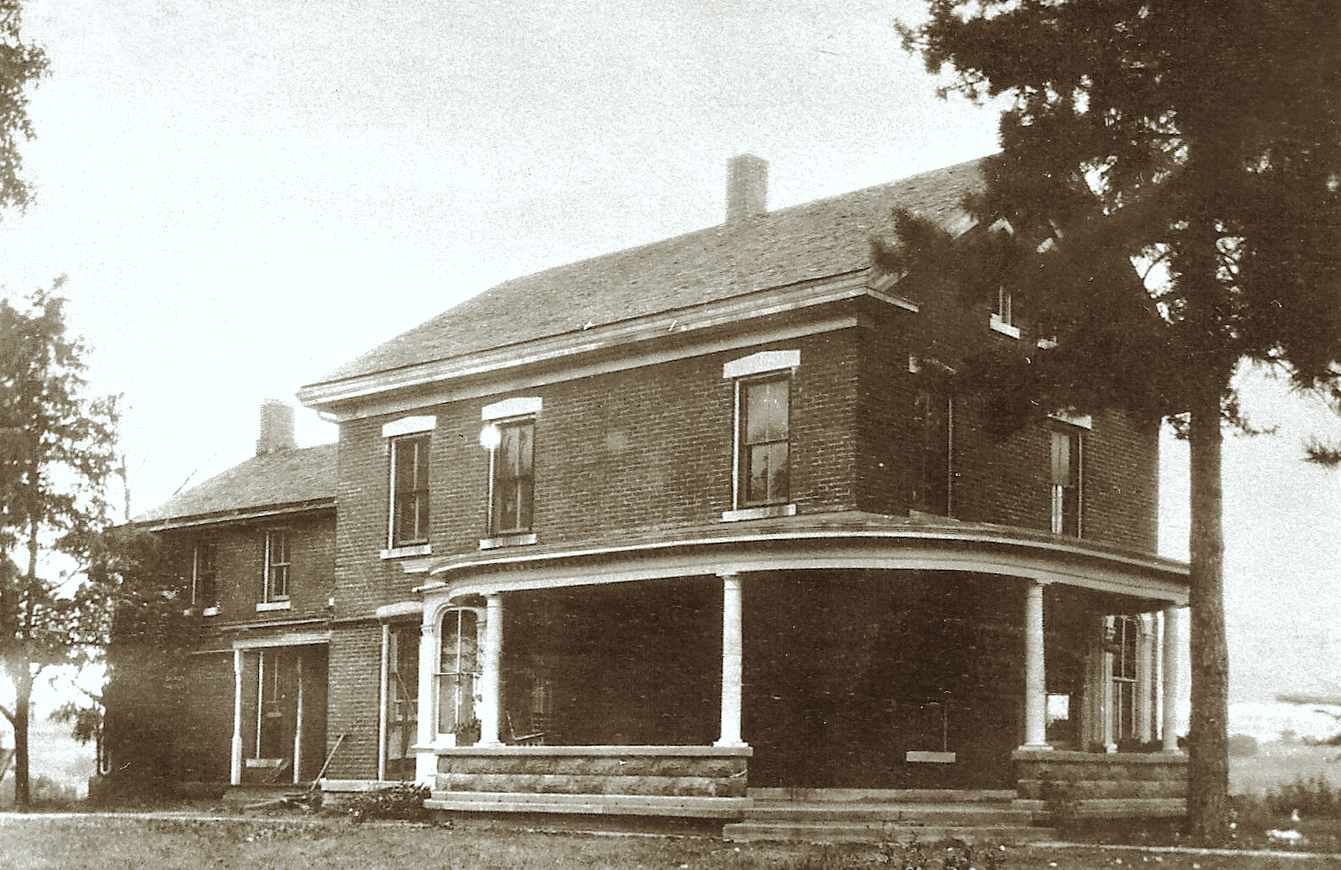
Historic image of the Platt House
Jeremiah Platt purchased ten acres near the college in September 1867. The house built there in 1871 is a notable example of post–Civil War farmhouses in the Manhattan area. Its brick construction is unusual for the period, as most local homes were built of limestone and wood. Platt’s brother‑in‑law, William Harrison Smith, was a builder and brickyard owner in nearby Junction City. While no direct evidence confirms his involvement in constructing the house, the circumstantial connections are compelling.
Platt retained ownership of the property during his years in Oklahoma (1893–1899), renting it out during his absence. His widow, Jennie, moved back into the home and remained there until she moved to St. Joseph, Missouri in 1903.
The home was sold in 1904 to Anna Neider, then exchanged hands five more times before being purchased by R.T. and Alice Hulshizer in 1925. They ran a tea room in the house for several years, then sold the property to Andrew Ekdahl in 1928. The Ekdahls deeded the home to Riley County in 1965. It was used as the headquarters of the county's ambulance service until 1980 and was leased to RCGS in 1981.
The home has undergone some modifications. In the late 1930s, the original porch columns were replaced with four pairs of square wooden posts that preserved the original spacing. RCGS added an annex to the south side of the home in 1998. The Platt House is listed on the National Register of Historic Places and you can view the nomination form here.
Jeremiah Platt
Jeremiah Evarts Platt was born on May 28, 1833, in Plymouth, Connecticut, the fifth of seven children. When he was six weeks old, his family moved to Mendon in Adams County, Illinois. At twenty‑three, he left college and traveled to Kansas with two of his brothers to support the Free‑State movement. He claimed 160 acres two miles south of Wabaunsee, within the Beecher Bible and Rifle Colony settlement. He spent several years teaching school and became the first county superintendent of Wabaunsee County.
On April 3, 1860, he married Sarah Jane 'Jennie' Smith, a Maryland native. The couple moved to Topeka in 1863. Later that year, Platt was elected to the faculty of the Kansas State Agricultural College (KSAC) in Manhattan, where he served from September 1864 to June 1883. He initially headed the preparatory department and taught vocal music, later adding mathematics and elementary English to his responsibilities. Widely respected by colleagues, he played a significant role in shaping the early college. Although the board of regents awarded him an honorary A.M. degree in 1872, his strong public advocacy for prohibition eventually led the board to demand his resignation in 1883.
Long active in the Congregational Church, Platt was ordained in 1888. Following his resignation from KSAC, he worked as an agent for the church, helping to establish Sunday schools throughout the state. From 1893 until his death, Platt continued this work in Oklahoma, where he was credited with the establishment of some 150 Sunday schools.
Jeremiah died in Guthrie, Oklahoma on April 16, 1899. Following his death, Jennie returned to Manhattan and resided in the family home until she moved to Saint Joseph, Missouri around 1903 to be near two of her four sons. Jennie passed away on January 9, 1917 in Saint Joseph, Missouri. Jeremiah and Jennie Pratt were buried in Sunset Cemetery in Manhattan.
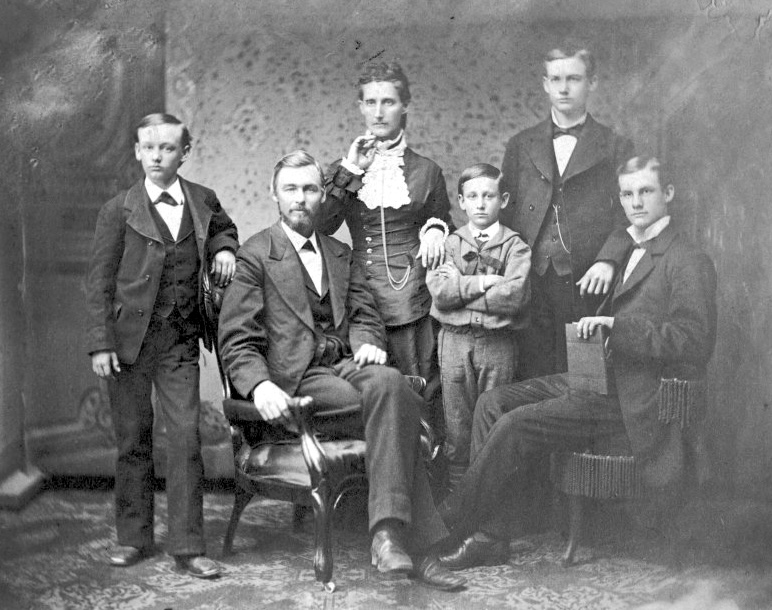
Jeremiah and Jennie Platt and family
Photographs courtesy of the Riley County Historical Society & Museum, copy and reuse restrictions apply.